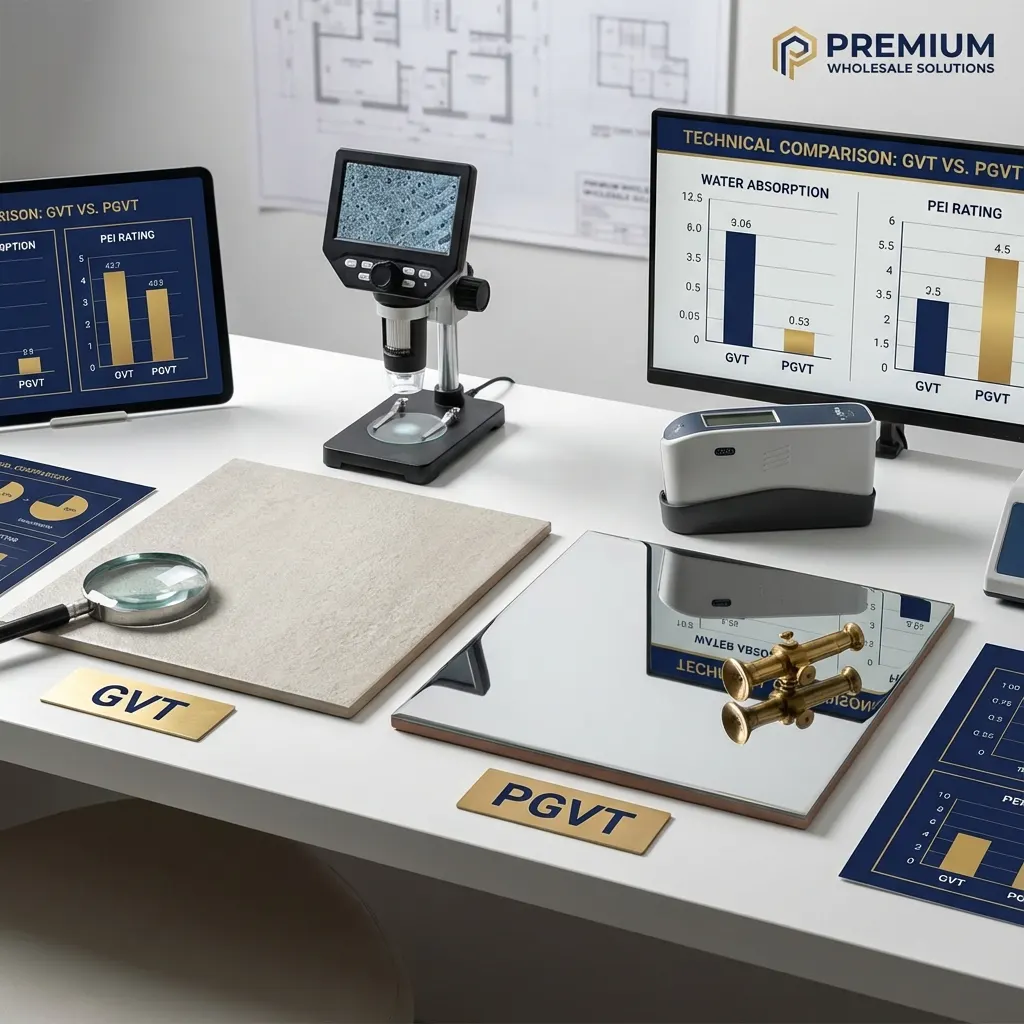
For importers, wholesalers, and large-scale developers, the choice between GVT and PGVT is more than semantics. It determines finish performance, maintenance regimes, and critical procurement variables: per-sqm cost, lead time, and shipping risk. This guide explains the technical differences, use-cases, and procurement checks you need when bulk sourcing glazed vitrified tiles — and why working with an experienced glazed vitrified tiles exporter or B2B porcelain tiles exporter matters for commercial projects.
Quick definitions: what are GVT and PGVT?
GVT (Glazed Vitrified Tiles) are vitrified bodies with a glazed surface applied on top. The glaze enables high-definition digital printing, color depth, and textured effects while retaining the low water absorption and mechanical strength of vitrified tile bodies.
PGVT generally refers to Polished Glazed Vitrified Tiles — glazed vitrified products that have been polished or finished to achieve a higher sheen and tighter surface finish than standard GVT. These technical distinctions affect abrasion resistance, reflectivity, and suitability for heavy-traffic applications.
Why the distinction matters to B2B buyers
When you're buying container-load quantities for retail malls, hospital wings, airports, or hotel chains, small specification gaps scale into big problems. Key procurement risks include:
- Mismatched batches
- Unclear WA% (water absorption)
- Inadequate PEI abrasion classes
- Poor packing that increases breakage during transit
Always specify the exact technical metrics in your RFQ rather than relying on the label GVT or PGVT alone. Technical specs that matter most are:
- Water absorption (ISO-10545-3)
- PEI abrasion class
- Bulk density
- Breaking strength
- Rectification tolerances
Technical comparison: GVT vs PGVT (what to verify in the lab report)
- Water absorption (WA%): Both GVT and PGVT are made on vitrified bodies. Typical vitrified targets are <0.5% WA — many export-grade products achieve <0.05% for porcelain stoneware-class tiles. Ask for lab certificates.
- Surface wear/PEI: Polished surfaces (PGVT) can show higher sheen but may need higher abrasion class if specified for heavy foot traffic. For retail and airports, require PEI 4 or 5 depending on traffic.
- Dimensional stability and rectification: Large-format modules must have rectified edges and tight tolerances to avoid lippage on site. For large-format orders, require dimensional drawings and slab tolerances.
Procurement rule
If a supplier hesitates to produce third-party lab reports or pre-shipment photos of packing, treat that as a red flag.
Use-cases & finish guidance for commercial projects
- High-traffic floors (malls, transport hubs): Prefer GVT/PGVT with high PEI abrasion class and matt or honed options to manage slip and maintenance.
- Aesthetic feature floors and lobbies: PGVT (polished glazed vitrified tiles) provides the premium sheen and stone-like look, but insist on manufacturer-provided abrasion and scratch hardness ratings.
- Walls and light-traffic interiors: GVT is perfectly suitable and more cost-efficient for vertical surfaces where abrasion is lower.
- Outdoor or wet areas: Only choose vitrified tiles specifically rated for exterior use (frost resistance, R-rating for slip) and confirm WA% and porosity metrics.