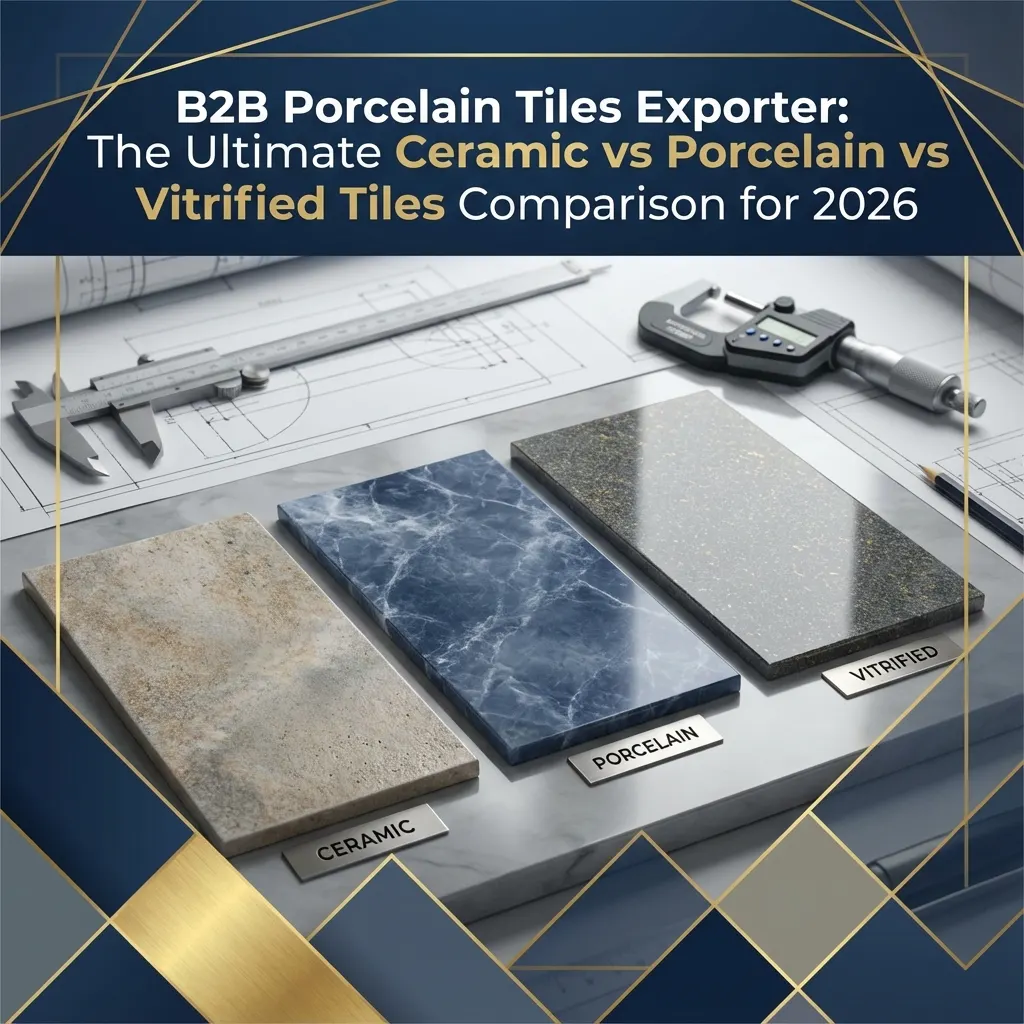
For wholesalers, large-scale developers, and commercial contractors, choosing the right surfacing material is not aesthetic window-dressing—it's a procurement decision that affects performance, uptime, lifecycle cost, and shipping logistics. If you import at scale, your three recurring headaches are quality consistency, lead times, and shipping risk. This guide cuts through the marketing noise with a firm, practical comparison of ceramic, porcelain, and vitrified tiles and shows how to specify, source, and ship with the least risk and best ROI in 2026.
Quick primer: what each material actually is
- Ceramic — softer, typically lower-fired clay body. Good for low-traffic interiors and cost-sensitive installs.
- Porcelain — a denser clay body fired at higher temperatures, lower water absorption, higher mechanical strength; suitable for high-traffic, wet areas, and many outdoor uses.
- Vitrified — a term often used in trade markets for low-absorption, glassy-surface tiles produced by vitrification; specifications can vary, so treat the term as a commercial category rather than a single technical grade.
Want the short technical checks? Ask suppliers for WA% (water absorption), PEI wear rating, rectified edge tolerance, and breaking strength numbers—those four metrics will separate market-speak from actual export quality.
Why Porcelain is Dominating 2026 Trends
Porcelain's engineered consistency, ability to mimic natural stone at scale, and suitability for large-format slabs have kept it in designers' and procurement teams' crosshairs. Large-format porcelain slabs reduce grout lines, speed installation sequencing, and create the "solid surface" looks clients now demand for lobbies, retail, and hospitality. Market reports and trade coverage from leading tile manufacturers confirm continued growth in large format and technical porcelain for 2026.
For B2B buyers this matters: fewer on-site adjustments, predictable COAs, and a product that aligns with modern maintenance expectations. If your specification calls for high uptime and low life-cycle maintenance, porcelain will often be the safer, lower-TCO choice compared with standard ceramic. When you need quantities, rely on a reputable B2B porcelain tiles exporter who publishes test reports and container packing specs up front.
Technical Breakdown: Ceramic vs Porcelain vs Vitrified (the numbers that matter)
- Water absorption (WA%): Porcelain typically < 0.5% (often marketed < 0.1% for porcelain stoneware). Vitrified categories are often < 1% but vary—always request lab data. Ceramic is higher and not ideal for wet/exterior use.
- Density & strength: Porcelain's finer clays and higher firing give better bending strength and abrasion resistance. Use PEI and breaking load figures to compare, not marketing names.
- Dimensional stability: For large-format porcelain slabs (1200x2400 and larger) look for rectified edges and tight length/width tolerances—that's what separates a premium porcelain slab exporter from commodity sellers.
If a supplier resists sharing WA%, PEI, or a third-party lab report, walk away. For commercial work, those numbers are contract-level spec items.
Procurement checklist for procurement managers and contractors
- Require WA%, PEI, breaking load, and rectification tolerance for every SKU.
- Ask for pre-shipment photos of palletized loads and an annotated packing list.
- Confirm container sqm capacity and gross weight before booking.
- Specify Incoterm (FOB or CIF) and who manages fumigation, fumigation certificates, and HS codes.
- For slabs, request edge protection and crate drawings; for natural stone request slab pictures and a batch sample.
- Add a 1-container trial before committing to sustained multi-container orders.
Choosing the right partner
If you need scale, transparency, and predictable delivery for big projects, a qualified B2B porcelain tiles exporter or porcelain slab exporter who also acts as a wholesale natural stone supplier will give you the cross-category leverage designers and logistics teams love: one vendor, consolidated shipping, harmonized packing, and a single QA process.
We work with export-grade porcelain slabs (including large format porcelain slabs 1200x2400), commercial-grade vitrified tiles, and curated natural stone lines, and we publish lab reports, packing specs, and container loading data on request.
Conclusion — real procurement moves, not buzzwords
For commercial projects in 2026 the pragmatic approach is to specify materials by performance metrics, not by label. Use porcelain where you need low absorption, high durability, and large-format continuity. Use natural stone where uniqueness and premium signaling justify the additional lifecycle cost. And always insist on lab data, export-grade packing, and transparent Incoterms.